Friday, September 1, 2023

Middle Meningeal Artery Embolization with Liquid Embolic Agents for Chronic Subdural Hematoma: A Systematic Review and Meta-analysis

Middle Meningeal Artery Embolization with Liquid Embolic Agents for Chronic Subdural Hematoma: A Systematic Review and Meta-analysis


Clinical Question

Is middle meningeal artery embolization (MMAE) via liquid embolic agents a safe and effective alternative to conventional neurosurgery for treating chronic subdural hematomas?

Take Away Point

MMAE demonstrated 100% success rate, significantly lower reoperation, recurrence, and mortality rates compared to conventional neurosurgery.

Reference

Mowla A, Abdollahifard S, Farrokhi A, Yousefi O, Valibeygi A, Azami P. Middle Meningeal Artery Embolization with Liquid Embolic Agents for Chronic Subdural Hematoma: A Systematic Review and Meta-analysis. J Vasc Interv Radiol. 2023;34(9):1493-1500.e7. doi:10.1016/j.jvir.2023.05.010

Click here for abstract

Study Design

Systematic review and meta-analysis of 14 studies containing 276 patients

Funding Source

No reported funding

Setting

Academic, Keck School of Medicine, Los Angeles, CA
Academic, Shiraz Research Center for Neuromodulation and Pain, Shiraz, Iran
Academic, Shiraz University of Medical Sciences, Shiraz, Iran
Academic, Fasa University of Medical Sciences, Fasa, Iran


Figure

Figure E1.Heterogeneity, proportion, and 95% confidence interval related to the success rate of chronic subdural hematoma treatment following middle meningeal artery liquid embolization after excluding the study by Fan et al. CI = confidence interval. (Fan G, Wang H, Ding J, et al. Application of absolute alcohol in the treatment of traumatic intracranial hemorrhage via interventional embolization of middle meningeal artery. Front Neurol 2020; 11:824.)


Summary


    Chronic subdural hematoma (cSDH) is one of the most common neurological conditions encountered in the elderly, with some requiring neurosurgical intervention due to the severity of the nonspecific symptoms. Middle meningeal artery (MMA) has been stated to be the predominant supplier contributing to the prevalence of cSDH, and multiple studies have studied the efficacies and safety of MMAE as an alternative option.

    The authors performed a systematic review and meta-analysis. Initially, 628 studies were retrieved using Preferred Reporting Items for Systematic Reviews and Meta-Analyses Criteria. The researchers ultimately extracted 14 eligible articles comprising of 276 patients undergoing 305 embolization procedures. They then evaluated the clinical success rate, adverse events rates, recurrence rates, reoperation rate, and reduction in size of cSDH.

    The results of the study demonstrated the following: Mean age of 66 years, 100% technical success rate, 1% adverse event rate, 3% recurrence rate, 4% reoperation rate, 94% reduction rate in the size of the hematoma, 78% achieving complete elimination of the hematoma, 0% mortality rate. All of these results were within the 95% confidence interval.

    These results demonstrated highly favorable results when compared to invasive neurosurgical interventions. For example, the article demonstrated that the recurrence rates of common neurosurgical techniques ranged from 11.7-28.1% compared to MMAE’s 3%. The reoperation rate with conventional methods was up to 26.4% compared to to MMAE’s 4%.


Commentary


    The authors in this study evaluated the efficacy and safety of MMAE and demonstrated extremely favorable outcomes when compared to conventional neurosurgical techniques. Most notably they report a 100% success rate and 0% mortality rate. The findings of this study can help patients who are poor surgical candidates, and as the article briefly alluded to, can significantly limit the risk associated with longer hospital stays.

Post author

Naeem Patel, DO
Radiology Resident, PGY4
Department of Radiology, Interventional Radiology Division
Hartford Hospital, Hartford, CT
@Naeemp7Patel

Wednesday, August 9, 2023

Safety and Effectiveness of Expandable Intravertebral Implant Use for Thoracolumbar Burst Fractures

Safety and Effectiveness of Expandable Intravertebral Implant Use for Thoracolumbar Burst Fractures


Clinical question

Are expandable intravertebral implants (Spinejack; Stryker, Kalamazoo, Michigan) a safe and effective treatment option for patients with thoracolumbar spine burst fractures without fracture-related neurologic deficit.

Take away point

Expandable intravertebral devices are safe and effective for improving pain, vertebral body height, fracture fragment retropulsion, and central canal diameter compromise in patients without fracture-related neurologic deficit.

Reference

Wei H, Hsu D, Katta H, Lowenthal J, Kane I, Kazmi S, Sundararajan S, Koziol J, Gupta G, Johnson S, Kang F, Moubarak I, Roychowdhury S. Safety and Effectiveness of Expandable Intravertebral Implant Use for Thoracolumbar Burst Fractures. J Vasc Interv Radiol. 2023 Aug;34(8):1409-1415.

Click here for abstract

Study design

Retrospective, observational, descriptive study

Funding Source

None


Setting

Single center


Figure

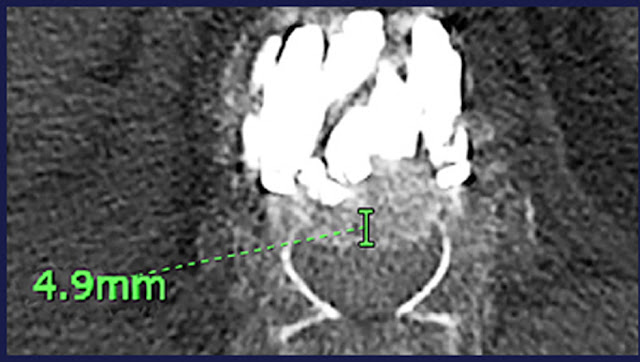
Postprocedural thoracic spine computed tomography using expandable intervertebral implantation demonstrated an improved degree of retropulsion.

Summary


Imaging studies before and after expandable intravertebral implantation and medical records of 33 patients, 11 (33.3%) men and 22 (66.6%) women with an overall mean age of 71.7 years ± 8.3, were reviewed for 60 thoracolumbar Magerl Type A3 injuries secondary to osteoporosis, trauma, or malignancy. The mean follow-up time was 299 days.

Implantation of an expandable intravertebral device resulted in a statistically significant reduction in bone fragment retropulsion (mean ± SD, 0.64 mm ± 16.4; P < .001), reduction in the extent of canal compromise (mean, 5.5%; P < .001), increased central canal diameter (mean ± SD, 0.71 mm ± 1.3; P < .001), and restoration of vertebral body height, with a mean increase of 5.0 mm (P < .001). However, the implantation did not result in a statistically significant kyphosis reduction (mean, 1.38°; P = .10). All patients except for 1 reported improvement in pain after surgery, with a mean improvement of 1.54 on a 4-point pain scale (P < .001). No clinically significant adverse events were reported.

Commentary


Expandable, intervertebral implants are a new method of treating vertebral compression fractures. This study evaluates their use in burst fractures that are not causing neurologic deficits. The authors found improvements in pain, central canal compromise, and degree of retropulsion. The authors do admit that the improvements in central canal compromise and retropulsion were small. Kyphosis was not significantly changed after the procedure. This study is a promising early step toward more rigorous comparison of intervertebral implants with vertebroplasty or kyphoplasty in similar settings.

Post author

Timothy Huber, MD
Jefferson Radiology
@IR_Huber

Tuesday, August 8, 2023

Comparison between Suprapapillary and Transpapillary Uncovered Self-Expandable Metallic Stent Placement for Perihilar Cholangiocarcinoma

Comparison between Suprapapillary and Transpapillary Uncovered Self-Expandable Metallic Stent Placement for Perihilar Cholangiocarcinoma


Clinical question

How do suprapapillary and transpapillary uncovered self-expandable metallic stent placement compare for perihilar cholangiocarcinoma?

Take away point

Suprapapillary and transpapillary stent placement procedures were similar in terms of procedural success, occlusion rate, revision rate, postprocedural AEs, and 30-day mortality.

Reference

Borges AP, Silva AV, Donato P. Comparison between Suprapapillary and Transpapillary Uncovered Self-Expandable Metallic Stent Placement for Perihilar Cholangiocarcinoma. J Vasc Interv Radiol. 2023 Aug;34(8):1400-1408.

Click here for abstract

Study design

Retrospective, observational, descriptive study

Funding Source

None

Setting

Single academic center


Figure

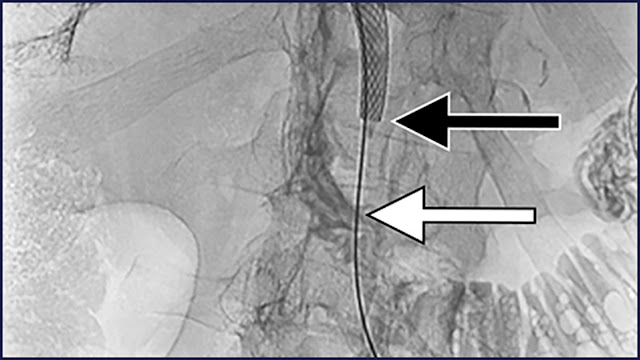
A self-expanding metallic stent was placed with its lower margin (black arrow) above the level of the sphincter (white arrow).

Summary


A single-center retrospective study of 54 patients with inoperable perihilar cholangiocarcinoma who underwent percutaneous transhepatic biliary stent placement between January 1, 2019, and August 31, 2021, was conducted. According to stent location, the patients were classified into 2 groups: suprapapillary (S) and transpapillary (T). Demographic data, Bismuth-Corlette classification, type and location of the stent, laboratory data, postprocedural AEs, procedural success, stent occlusion, reintervention rate, and mortality were compared between the groups.

Stent placement was suprapapillary in 13 (24.1%) patients and transpapillary in 41 (75.9%) patients. Mean age was higher in Group T (78 vs 70.5 years; P = .046). Stent occlusion rates were similar in the 2 groups (Group S, 23.8%; Group T, 19.5%), as were AE rates, the most common being cholangitis (Group S, 23.1%; Group T, 24.4%). There were no significant differences in revision rate (Group S, 7.7%; Group T, 12.2%) and 30-day mortality rate (Group S, 15.4%; Group T, 19.5%). Ninety-day mortality rate was statistically significantly higher in Group T (46.3% vs 15.4%; P = .046). Preprocedural bilirubin level was higher in Group T, as were postprocedural leukocyte and C-reactive protein (CRP) levels.

Commentary


This study evaluates transpapillary biliary stenting versus suprapapillary stenting for cholangiocarcinoma. Both methods has theoretical benefits, but have not been directly compared. The authors did not find significant differences in outcomes or adverse events between the two groups. However, there was a small sample size, and there were significantly more patients in the transpapillary group (41) compared to the suprapapillary group (3). Incomplete follow up data also limits the detection of adverse events. Further studies of this topic with larger sample size and more consistent follow up are needed, but this study suggests that stent position may not matter as much as once thought.

Post author

Timothy Huber, MD
Jefferson Radiology
@IR_Huber